
Knox County Court Records After a Jail Arrest
Once a person is booked into the Knox County Jail, the case moves to the Ninth Judicial Circuit, which covers Knox and five neighboring counties. The State's Attorney reviews the arresting agency's reports and decides which charges to file, and that filing opens a court case. From that point the court record, not the jail booking, is the authoritative source for the charges and how they are resolved. An arrest is the start; the court record is where the accusation is tested.
It helps to keep the two sides separate. The booking and custody details sit with the sheriff, and the jail inmate records page covers the roster and booking side, while booking photos are explained on the jail mugshots page. The charges the prosecutor actually files, and every hearing after them, belong to the court record, which is what this page focuses on after an arrest.
How to Find Knox County Court Records After an Arrest
The Ninth Judicial Circuit links the public to its case search through Judici, the online portal for Knox County court cases. The circuit's website offers a Search Cases link, and the Knox County case search runs on Judici. When a browser opens the Knox page directly it may show an access check, so going through the circuit site is the cleaner route. Older, sealed, juvenile, or document-level records may not appear online and require the Circuit Clerk.
The Ninth Judicial Circuit site is the official gateway to Knox County court resources and the case search.
The Ninth Judicial Circuit website links to the Knox County case search and court information.
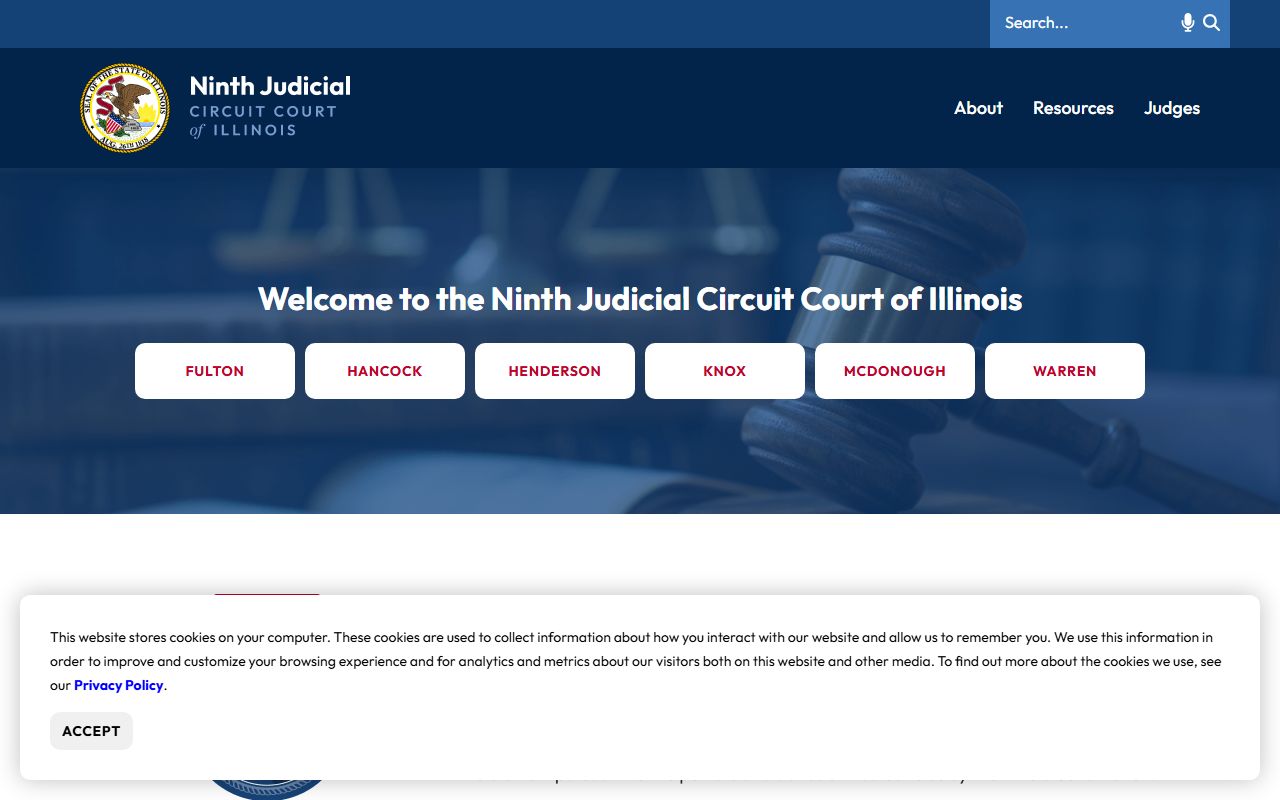
From the circuit site, the case search opens in Judici, where a name or case number returns the charge list and case events.
- Open the Ninth Judicial Circuit site and follow the Search Cases link to the Knox County portal.
- Search by defendant name or case number, clearing any access check the page shows.
- Open the case to read the charge list and the case history.
- Check each charge's level and current status, and contact the Circuit Clerk for sealed or document-level records.
The Knox County case search portal presents the public lookup that the circuit links as Search Cases.
The Judici Knox County case search is the portal the circuit links for public case lookups.
Because the live Knox page showed an access check during inspection, the exact search-field labels are not published here, so the table reflects only what the portal presents.
| Field Label | Type | Required | Notes |
|---|---|---|---|
| Access check | Challenge | Yes | Judici may show an access check to direct visits |
| Case search fields | Portal form | Varies | Inspect in the browser after the check; labels are not published here |
How Charges Get Filed After an Arrest: Complaint, Information, and Indictment
The court record begins when the prosecutor files a charging document, and Illinois uses three main types. A booking at the jail records the arrest charge, but the charging document is what actually starts the court case and can differ from what the roster showed.
| Complaint | Information | Indictment | |
|---|---|---|---|
| Filed By | Officer or prosecutor | Prosecutor | Grand jury |
| Common For | Misdemeanors and early charges | Many felonies | Serious felonies |
| Starts the Case | Yes | Yes | Yes, and may come later |
An indictment can appear weeks after the arrest, so an early court record may show one charge while a grand jury later returns others. The safe habit is to match the jail record and the court record by name, arrest date, and case number, then rely on the court record for the formal status.
Charge Status in a Knox County Court Record
Charges rarely stay frozen as a case moves. A prosecutor can amend, reduce, add, or drop them, and a judge resolves them at hearings. That is why a booking charge on the jail roster can read differently from the charge a court record finally shows. The terms below appear often in Knox County case histories.
| Status | What It Means |
|---|---|
| Pending | The charge is filed and not yet resolved |
| Amended or reduced | The prosecutor changed the charge or lowered it to a lesser offense |
| Dismissed | The charge ended without a conviction |
| Nolle prosequi | The prosecutor chose not to pursue the charge |
A disposition is the outcome of a charge, and a conviction is a finding or admission of guilt. Neither is the same as the arrest charge, which is only the starting accusation.
The State's Attorney and Charges After an Arrest
Illinois calls its county prosecutor the State's Attorney, not the district attorney. The Knox County State's Attorney reviews police reports after an arrest and decides what to charge, which is why the court record can differ from the booking sheet. The office sits on the third floor of the Knox County Courthouse at 200 South Cherry Street in Galesburg and answers at 309-345-3880. It also handles records requests for prosecutor-office material in person or by mail, though active-case files often carry exemptions.
The State's Attorney page explains the office's charging role and contact options.
The Knox County State's Attorney page lists the office phone and records-request methods.
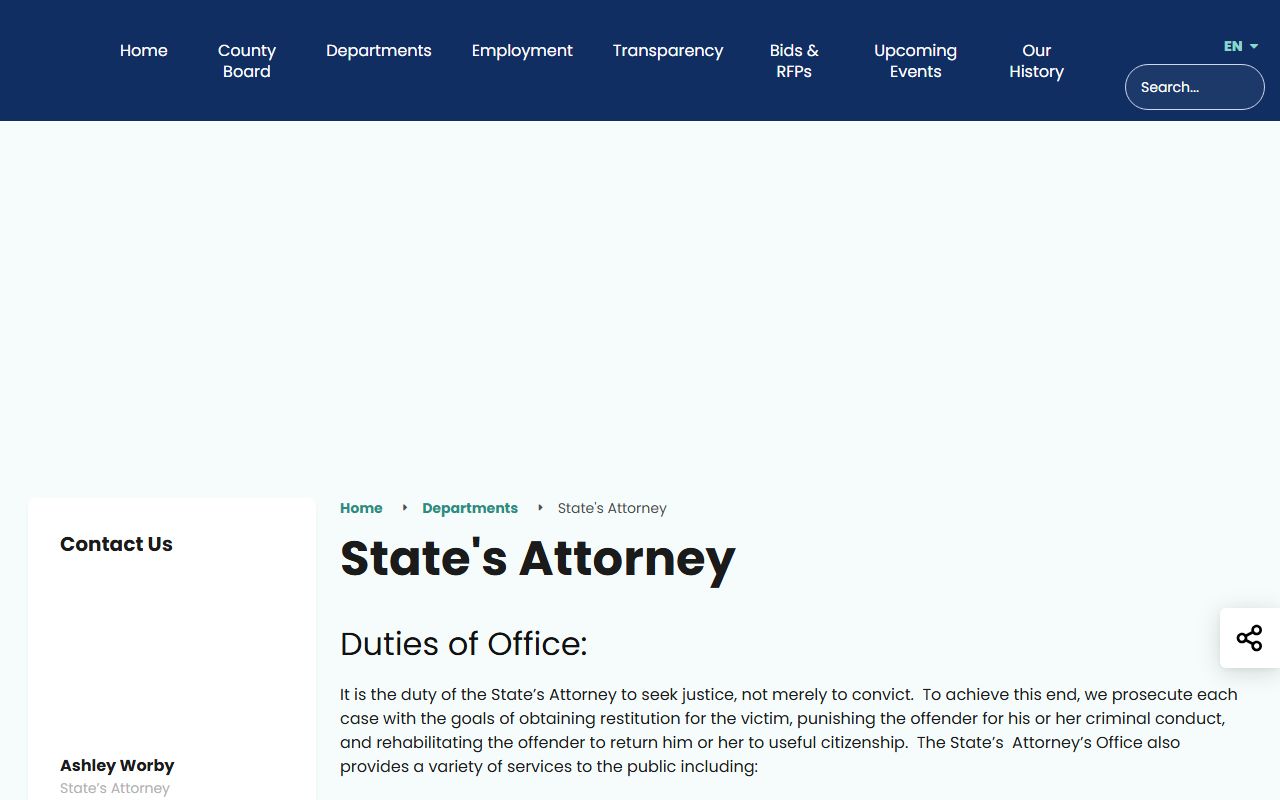
For the case file itself, the Circuit Clerk is the keeper of court records, including files and exhibits, and is the office to contact when a record is not online.
Bond and Release After a Knox County Arrest
Illinois changed its bail system under the Pretrial Fairness Act, so the old idea that anyone can simply post cash and walk out no longer fits. Monetary bail is largely abolished, and most people are presumed eligible for pretrial release on conditions. A judge can deny pretrial release only after the State files a verified petition and the court holds a detention hearing. Release can also be blocked by a hold from another agency or a federal detainer.
| Bond Type | How It Works |
|---|---|
| Cash bond | A payment historically used for release; the Knox jail lists accepted payment forms when a bond exists |
| Surety bond | A third party guarantees appearance; used less under Illinois pretrial reform |
| Recognizance release | Release on a promise to appear and follow conditions, presumed under state law |
| No-bond hold | Custody where a court detention order or outside hold prevents release |
When a payment obligation does exist, the Knox County Jail accepts bond around the clock and applies a $57 jail processing fee. It takes cash, money orders, cashier's checks, and credit or debit cards, but not personal checks, and it links an online option through CourtMoney once the correct amount is confirmed.
Warrants That Lead to an Arrest
Many arrests start with a warrant. An arrest or bench warrant can result in a booking into the Knox County Jail, and the underlying case usually shows in the court record. The sheriff publishes a most-wanted page for people law enforcement is seeking, but that page is a public-safety notice, not a full warrant database, so it will not list everyone with a warrant. For a tip, the sheriff uses a crime line at 309-344-0044, and the 24-hour number is 309-343-9151.
Active-warrant and investigative records can be withheld when release would interfere with proceedings or safety, so a records request is not a live warrant-verification tool. Clearing or resolving a warrant is court work, best handled with an attorney or the issuing court rather than by simply appearing without advice.
Charges vs. Convictions
Being arrested and charged is not the same as being convicted, and the difference matters for how a record should be read. A charge is an accusation; a conviction is the result after a plea or verdict.
| Charge | Conviction | |
|---|---|---|
| Stage | Accusation | Verdict or plea |
| Burden of Proof | Probable cause | Beyond a reasonable doubt |
| Public Record | Yes | Yes |
Sealed vs. Expunged Arrest Records
After a dismissal or an eligible outcome, Illinois law lets some records be cleared from public view. Expungement and sealing are governed by the state's Criminal Identification Act, and a court order changes how an official record is accessed. The two routes are not the same.
| Sealed | Expunged | |
|---|---|---|
| Visibility | Hidden from most public access | Destroyed or treated as if it never existed |
| Law Enforcement | Limited access remains | Very limited access |
| Eligibility | Set by 20 ILCS 2630/5.2 | Set by 20 ILCS 2630/5.2 |
An order that seals or expunges an official record does not erase copies a third party may already hold, so the right route is the court order and the originating agency, explained further under the state expungement and sealing statute.
Background Checks and Court Records
A casual look at a court record is very different from a regulated background check. Formal background screening for jobs, housing, or credit must follow the federal Fair Credit Reporting Act, which sets accuracy and notice rules that a public-records search does not. Public case information is open, but using it for those covered decisions carries legal duties that fall on the user.
Important: This site is not a consumer reporting agency under the FCRA, and its information may not be used for employment, housing, credit, or insurance screening.
Knox County Courthouse Access and Court Records
Some court records still require a trip to the courthouse, and the Illinois Courts directory lists the practical details. The Knox County Courthouse stands at 200 South Cherry Street in Galesburg, with the Circuit Clerk reachable at 309-345-3847 and hours of 8:30 a.m. to 4:30 p.m. on weekdays. The building was erected in the 1880s after the county seat moved from Knoxville to Galesburg, and it carries modern visitor services for people pulling records in person.
The Illinois Courts directory entry collects the courthouse address, hours, and visitor resources.
The Illinois Courts directory entry lists courthouse details for Knox County.
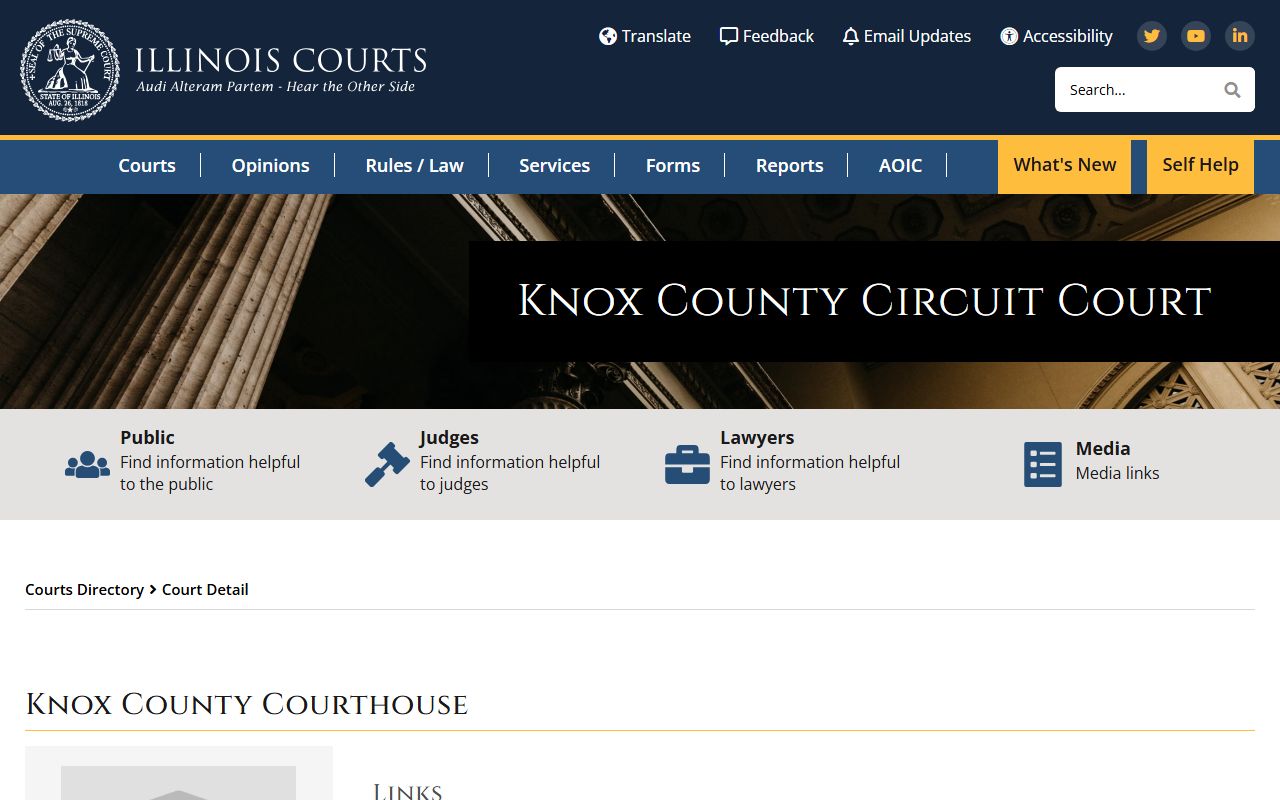
On site, the directory notes free parking around the building, a first-floor e-filing kiosk, a basement self-help center and law library, and a public entrance on the Cherry Street side with an accessible entrance at the southwest corner.
Restricted Court Records After an Arrest in Knox County
Not every record after an arrest is open. Juvenile cases are confidential and kept separate from adult records. Sealed and expunged charges drop out of public view, and some dismissed charges may be withheld. Records tied to an active investigation, or details that would threaten safety or facility security, can also be exempt. When an online search comes up empty, that does not always mean nothing happened, since the record may simply be restricted or held only by the Circuit Clerk.